


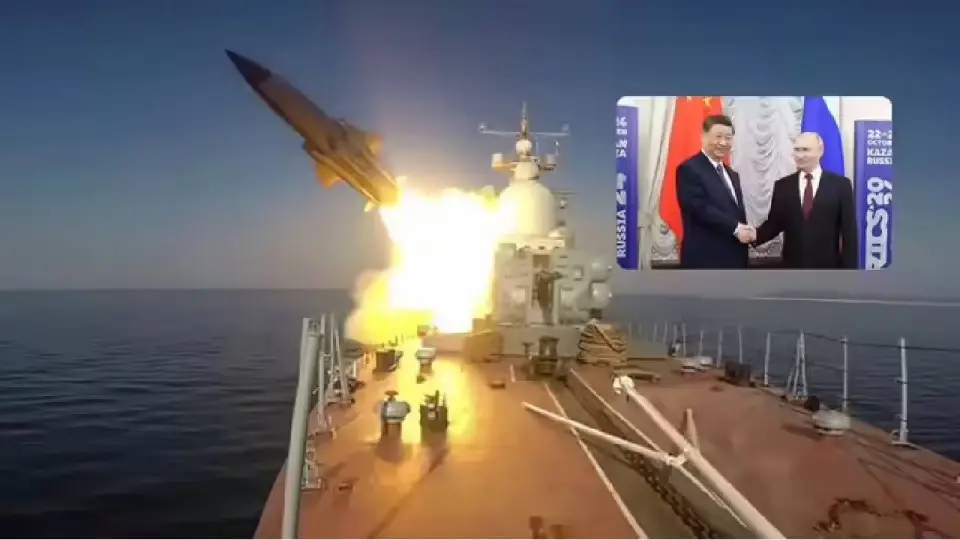
Russia China Dril (Credit: OpenAI )
International News: China’s Defence Ministry confirmed that the anti-missile exercise took place on Russian territory and was part of continued cooperation between both militaries. It clearly stated that the drills were not directed at any third country and not linked to any specific global event. Officials described it as a planned step under existing defence-coordination agreements. The announcement came through a late-night statement on the Ministry website. The message reflected Beijing and Moscow’s intention to show growing trust. Military training between both sides has become more regular over time.
The drill focused on anti-missile operations, simulating the interception of hostile threats. Russia and China used integrated systems to increase coordination. The aim was to improve rapid response skills during missile attacks. Earlier this year, the two nations also held artillery and anti-submarine drills in the Sea of Japan, expanding the training spectrum. These events show how both forces are working to handle complex security challenges together. Joint planning and rehearsals help them understand each other’s command structures more effectively. Their defence cooperation now covers land, air and sea.
Both countries have intensified strategic communication on missile defence and long-term stability. Delegations recently met to discuss security cooperation and future training. The partnership reflects an alignment of interests in defence technology, surveillance and deterrence. Repeated exercises build operational trust and familiarity between commanders. Each drill adds a layer of preparedness for unexpected conflict situations. The 2025 exercise shows that both sides are committed to sustained defence cooperation. Their message is that coordination will continue regularly.
China has officially denied any connection to global tensions. It stressed that there is no third-party target behind the training. The aim, they say, is to boost strategic stability. Still, any large-scale anti-missile drill naturally attracts regional curiosity. Countries often watch such activities for signs of shifting security equations. When two major nuclear powers test advanced missile-defence skills together, observers take note. But the official line remains simple: this was a routine defensive exercise.
Even without naming any adversary, such drills carry implications. Joint rehearsals strengthen capability and speed. Defence experts see moves like this as confidence signalling. It reminds neighbouring countries that China and Russia can coordinate military actions across borders. Some analysts believe it shows a long-term plan to address missile threats more effectively. Anti-submarine and artillery exercises earlier in the year support this approach. The more each side learns, the faster they can respond in real-world scenarios.
Both sides are expected to continue regular joint exercises. The current pattern suggests broader cooperation in surveillance, command integration and technology sharing. Foreign policy observers will watch if naval and aerospace drills expand further. Dialogues on strategic stability hint at deeper planning ahead. The pace of coordination may increase as international tensions evolve. Russia and China appear ready to move forward together in defence strategy. This adds a consistent layer of cooperation to regional security calculations.
Whenever major military powers conduct anti-missile drills, it raises important questions. Who are they preparing to defend against? What scenario are they rehearsing for? China and Russia insist this training is neutral and not a response to any event. Yet, the timing and scope always matter in geopolitics. For now, it shows that both nations continue to build a closer defence partnership. Their joint moves will remain closely watched by global security observers. Because in military cooperation, every drill sends a signal.











Copyright © 2025 Top Indian News


